
Clover came home on a Sunday in April, and by Wednesday I had learned the first rule of raising a puppy. A tired puppy is a good puppy, and a bored puppy is a small furry demolition crew. I did what everyone does. I walked her. Twenty minutes around the neighborhood loop before work, twenty more after dinner, and she still came back inside looking for something to pull apart. The walk tired her legs. It did nothing at all for her brain.
Then a rainy stretch in late May trapped us indoors, and on May 30 I ordered the Outward Hound Nina Ottosson Treat Tumble in the small size. It is a puzzle ball. You drop kibble inside, the puppy nudges and rolls it, and pieces fall out as she works. Clover solved it on day one. She is seven months old now, twenty-one pounds, and she still beats me to the kitchen when I lift it off the shelf. Here are ten reasons it wears her out faster than a walk, plus one honest limit I did not see coming.
The fifteen minute job that replaced our second walk
Small size, level one beginner puzzle, about 4.75 inches across and 5.29 ounces. This is the thing I reach for when the weather cancels the loop.
Amazon Check Today's Price on Amazon →Fifteen minutes of brain work buys you thirty minutes of exercise
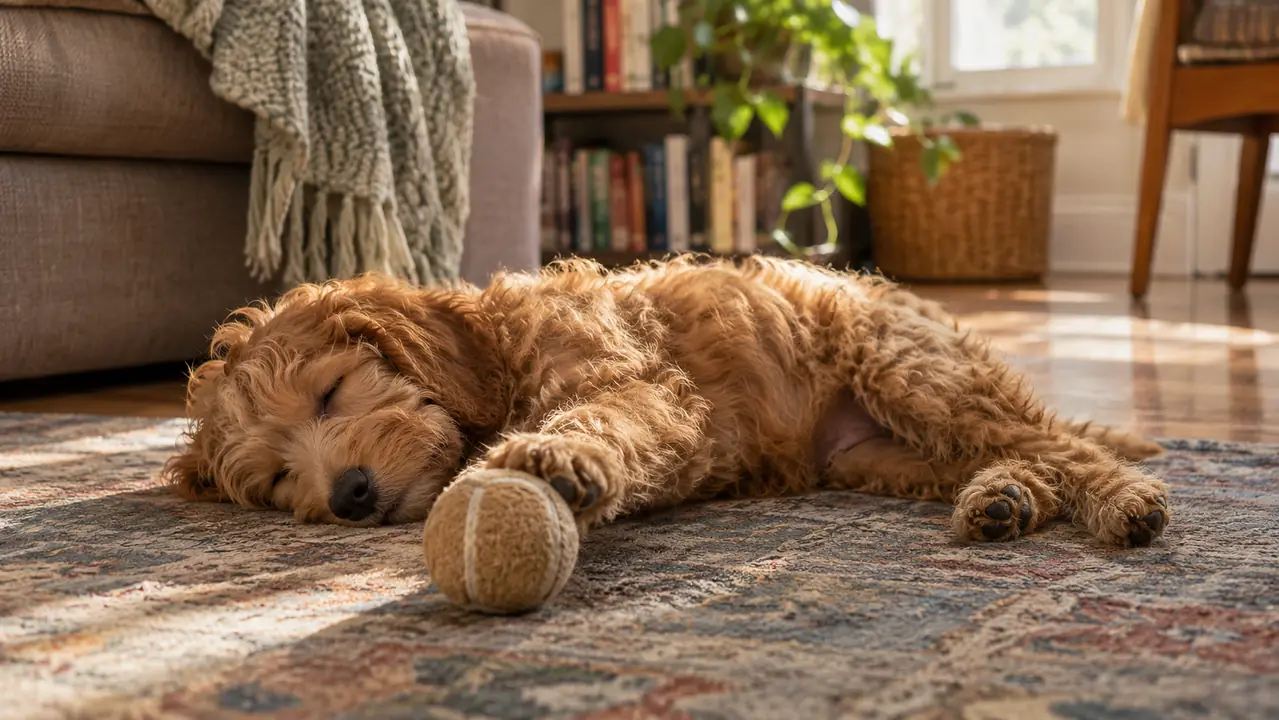
The listing says 15 minutes of brain-engaging play equals 30 minutes of physical activity, and I rolled my eyes at that line the first time I read it. Then I watched Clover work the ball for a quarter of an hour, flop down, and sleep through my entire Monday morning routine. Her legs were not tired. Her head was. That is the whole difference between a walk and a puzzle, and it is why I stopped treating the evening loop as my only tool.
Nudging and rolling is a job a puppy can actually finish
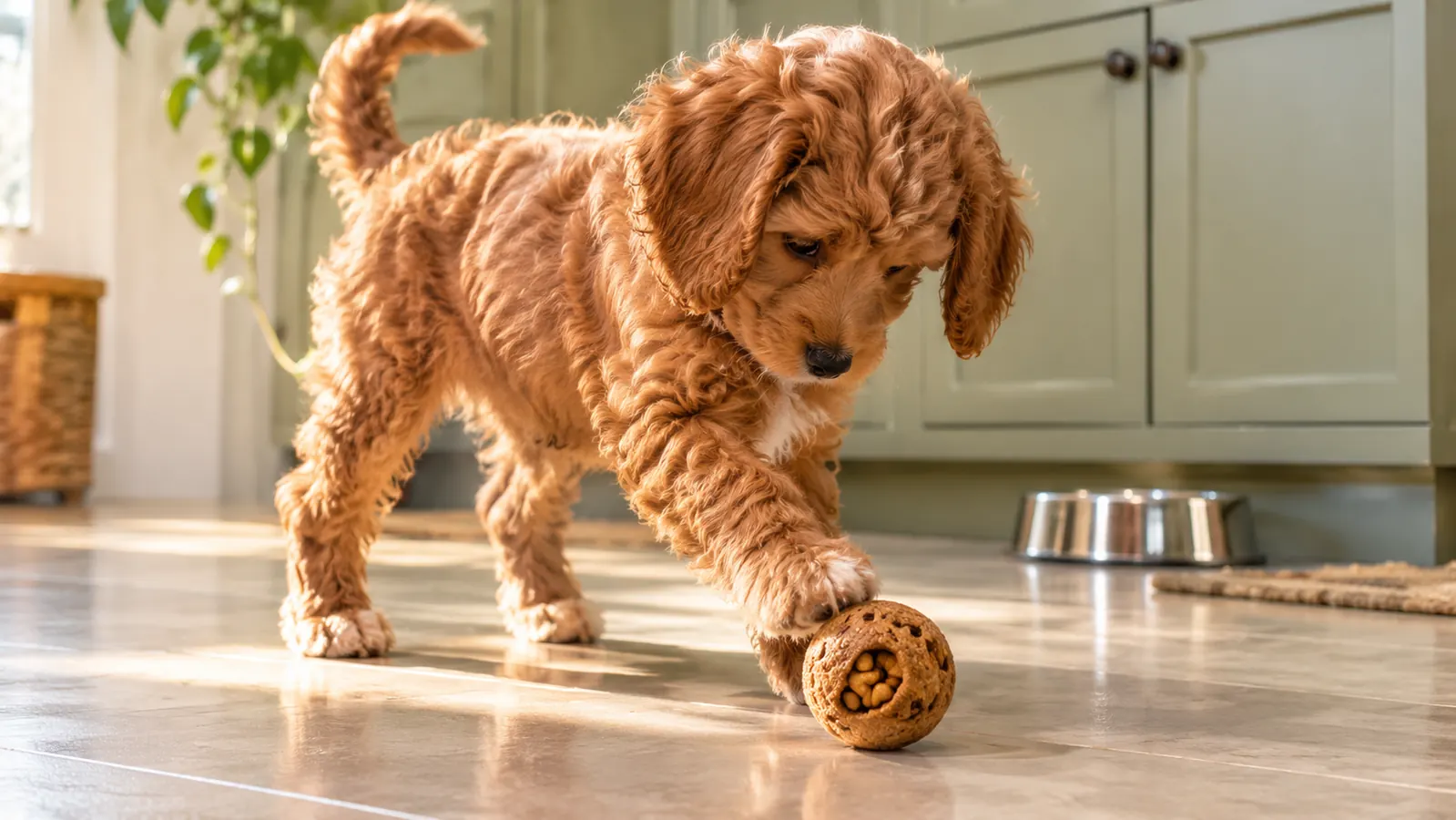
A walk has no ending. You come home and the puppy is still ready to go, because she never knew what the walk was for. A puzzle ends. The ball gives her a clear task, nudge it, roll it, get the kibble, and a clear finish when the food is gone. Seven months in, Clover still checks the ball after the last piece falls out, gives it one hopeful tap, and walks away to her bed. That arc, start to finish, is what actually settles her.
Breakfast stops being a ninety second race
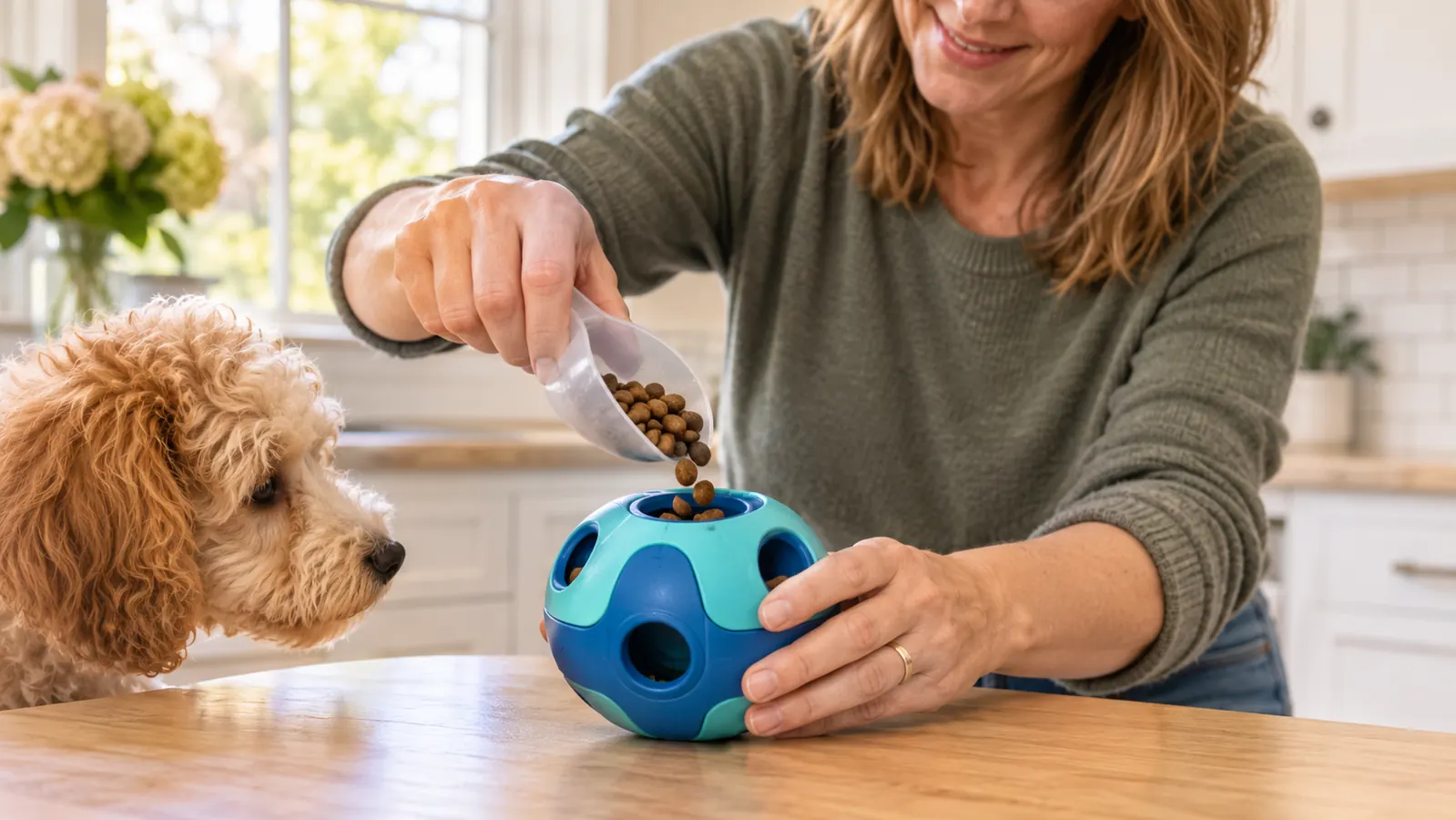
Kibble in a bowl takes Clover about a minute and a half, and then she looks up at me like I have cheated her out of something. The Outward Hound ball turns a measured portion of her regular food into fifteen minutes of work. Same food. Same amount. A completely different puppy at the other end of it. The other bonus is that it slows her down, which our vet had already asked us to do with a puppy who inhales.
It covers the rainy afternoon that walks cannot
Back on May 30 it rained for five days straight. The neighborhood loop got cut to a wet ten minutes and Clover was climbing the walls by Thursday. The ball gave the afternoon a shape. She worked breakfast and dinner out of it that week instead of getting a bowl, and the difference in the house by seven in the evening was the difference between a puppy and a small tornado with ears.
You can raise the difficulty without buying a second toy
The ball ships with tips and tricks for adjusting difficulty, and the listing notes that smaller treats come out more easily than larger ones. I tried it both ways. A bag of tiny training treats means a fast, easy win that keeps a young puppy interested. Bigger pieces of kibble mean she has to chase the ball across the kitchen floor to earn each one. Same toy, two completely different jobs, depending on what I put inside.
Fifteen minutes with the ball and Clover slept through my whole Monday morning routine. Her legs were not tired. Her head was.
At 4.75 inches it fits a small puppy, not just a big dog
This one is 4.75 by 4.75 by 4.75 inches and weighs 5.29 ounces, and the listing puts dog breed size at small. That matters when your puppy is on the smaller side the way Clover is. She can get her nose and a paw around it and she can push it across the floor without shoving it into a wall. It rolls under the edge of the couch, but never so far that I have to move furniture to get it back.
It rides in the car to my in-laws in Indiana
The ball weighs about five ounces, less than the water bottle I keep in the console, and it goes into Clover's car crate on the drive to Indiana. The listing calls it lightweight and portable and for once those words mean something. She works the ball for the first hour of the drive and sleeps for the second. I would rather have that than a puppy who whines from Columbus to the state line.
It gives you back the twenty minutes before the door
The real math of a puppy is not the walks. It is the twenty minutes between the shower and the front door, when a seven month old doodle decides the couch legs look delicious. Breakfast goes into the ball, and I get those minutes back. It is not a training breakthrough and it is not exciting. It is just a puppy with a job while I find my shoes and my keys.
It teaches work for food before you ever get to class
The recommended uses for this toy include indoor play, training and mental exercise, which sounds like a label doing label things. What surprised me is how much it set up real training. Clover learned that food can be earned instead of delivered, and that waiting pays. By the time we started working on 'leave it' at the kitchen counter, she already had a month of practice watching a piece of kibble drop and not diving at it.
It is the right first puzzle because it is a beginner puzzle
The listing calls this a level one beginner puzzle, and that is the point, not a weakness. A puppy who cannot solve a puzzle in the first minute does not try harder. She walks away from it and it sits in the toy bin forever. Clover finished this one on day one, and that quick win is exactly what you want. It built a puppy who volunteers to try the next new thing instead of one who gives up.
What I'd Skip
Three things I would skip. First, do not buy this thinking it replaces walks. It does not. It makes the loops you already take easier and it covers the days you cannot take them. Second, skip anything rated above beginner for a puppy under a year, because a puzzle that is too hard teaches nothing but frustration. Third, do not leave it down on the floor like a chew toy. When Clover starts gnawing on the Outward Hound ball instead of rolling it, it goes back on the shelf, and that habit is the reason it still works seven months in. Two more notes that are not complaints, just limits. The ball is not water resistant, so it stays out of the backyard hose and out of the lake. And if your puppy eats a measured amount, scoop that kibble out of her bowl before it goes into the ball. Ask your vet how much she should be eating in a day before you change anything about her meals.
The one puppy toy that earns its spot on our kitchen shelf
Level one beginner puzzle, 4.75 inches, 5.29 ounces. One measured meal goes in and a tired puppy falls out.
Amazon Check Today's Price on Amazon →