
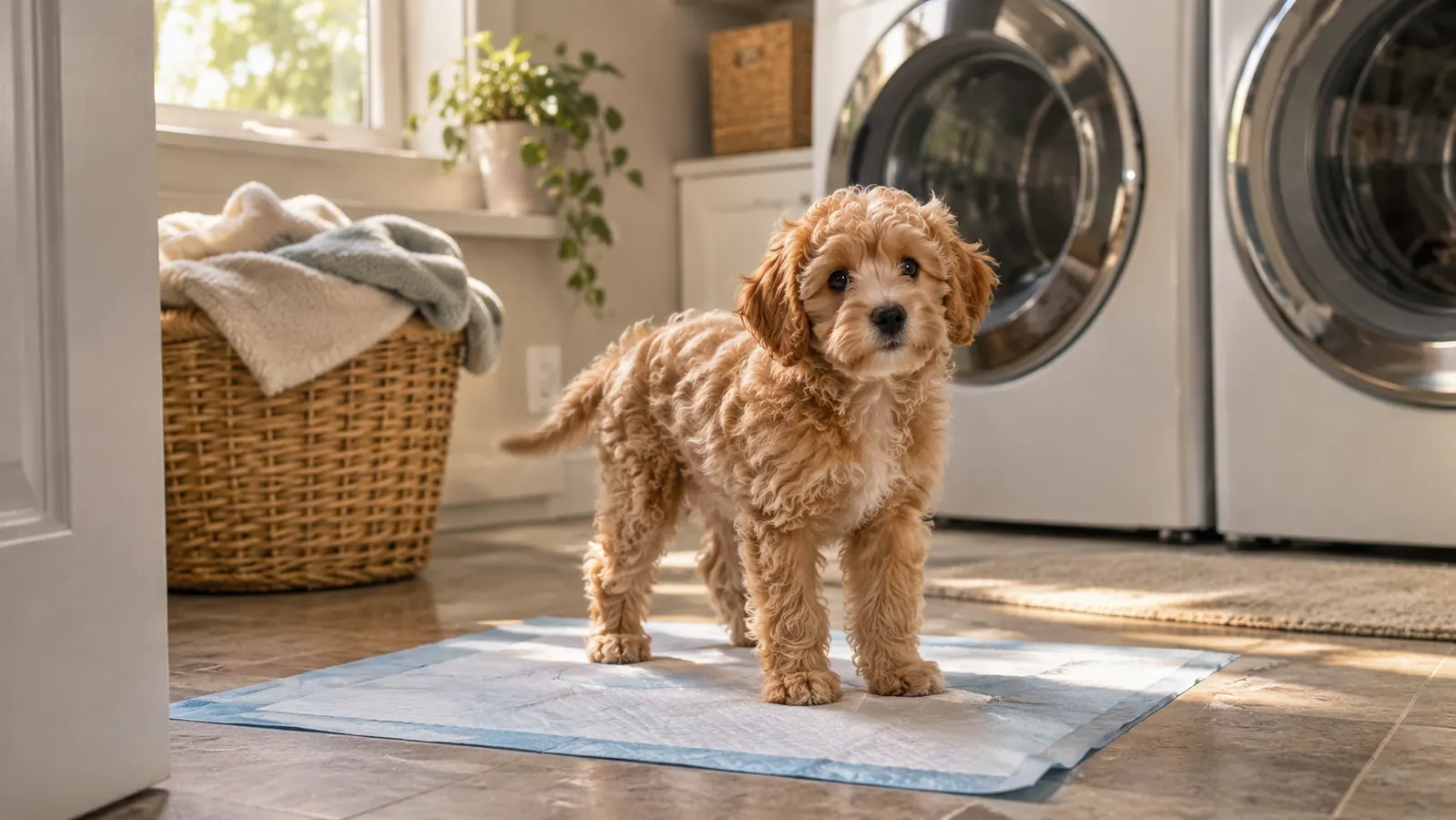
Clover came home on a Sunday in April 2026, and by Tuesday morning the laundry room smelled like something had crawled behind the washer and given up. I had ordered one box of Glad for Pets Puppy Pads the week before she arrived, mostly on a hunch that a nine week old puppy and a carpeted hallway were a bad combination. What I did not expect was that the pads themselves would be the thing keeping that room breathable. Four boxes later, I have opinions. These are the ten reasons the activated carbon version earned its spot on the floor next to the crate, written for anyone standing in the same aisle wondering whether the plain ones would have been fine.
One honest note before the list. Pads are not a training plan. Clover was reliably going out the back door by mid July, and since then the pads live by the door as an overnight and thunderstorm backup, plus one in the car crate for drives to Dan's parents in Indiana. But for the ten weeks that actually mattered, they did a job nothing else did. Here is what I noticed, roughly in the order I noticed it.
The pad that stopped my laundry room from announcing itself to guests
Standard 23 x 23 inch, five layers, activated carbon in the middle. One box got me through the first five weeks. Four boxes have covered seven months.
Amazon Check Today's Price on Amazon →The carbon layer goes after the smell, not just the puddle
Most pads I looked at online talk about absorbency and stop there. These have an activated carbon layer, and that single difference is why I stopped noticing the room. Urine smell is not the liquid sitting on the floor, it is the gas coming off it, and carbon is what grabs that gas. I am a dental hygienist, not a chemist, and I am not going to pretend to explain the mechanism. I just know the hallway outside the laundry room used to have a smell and now it does not.
Five layers keep the wet exactly where it landed
The listing says five layers, with an ultra absorbent polymer layer doing the locking and a plastic backing underneath. What that means in a split level house with hardwood in the hall: I could pick up a used Glad pad by one corner and carry it to the trash without a trail behind me. The backing is the part nobody talks about and the part that matters most. A pad that wicks through the bottom is worse than no pad at all, because now you are cleaning the floor and the pad.
Liquid is gone in under 15 seconds
The specs put absorption at under 15 seconds. I timed it once with a measuring cup of water because that is the kind of person I am, and it was close enough that I stopped counting. In practice this matters with a puppy who is still figuring out where her feet are. Clover would step in the wet spot, take two steps, and lie down. A slower pad means a wet paw and a wet paw print on the kitchen tile, and then you are mopping at 6 a.m. before work.
Up to 12 hours means one pad handles the whole night
Clover started sleeping through the night earlier than I expected, which meant the pad by the back door sat there from about 10 p.m. until 6. The listing rates it at up to 12 hours of protection. I never pushed it past that and I would not recommend pushing it. But a full night on one pad, with no smell greeting me at the top of the stairs, is the difference between a backup plan and a chore I dread.
The 23 x 23 inch size fits a real pad station
These are the standard size at 23 by 23 inches, which is the right footprint for a puppy and a laundry room floor. The same line comes in jumbo at 28 by 30 inches for bigger dogs. Clover is a mini goldendoodle at about 21 pounds now, and the Glad standard pad still fits under her with room to spare. On a small dog, an oversized pad is mostly a bigger thing to fold up and throw away four times a day.
Disposable is the right call on the worst nights
Someone will always tell you to buy washable pads and save the trash. I have never owned reusable pads, so I will not pretend I ran that test. What I can tell you is that at 2 a.m., with a puppy who has just had an accident and a washing machine that takes an hour, disposable wins without much of a fight. You fold it, you throw it out, you go back to bed. That is the entire argument and it is enough.
A 50 count box outlasts the heavy training weeks
Fifty pads sounds generous until you are using three or four a day. I went through the first Glad box faster than I planned, and I bought four in total since April. That count sounds excessive written down. It is not, once you add up the overnight pad, the daytime pad, and the extra one you lay down because it is raining sideways and she has decided the backyard is lava.
One pad in the car crate handles a long drive
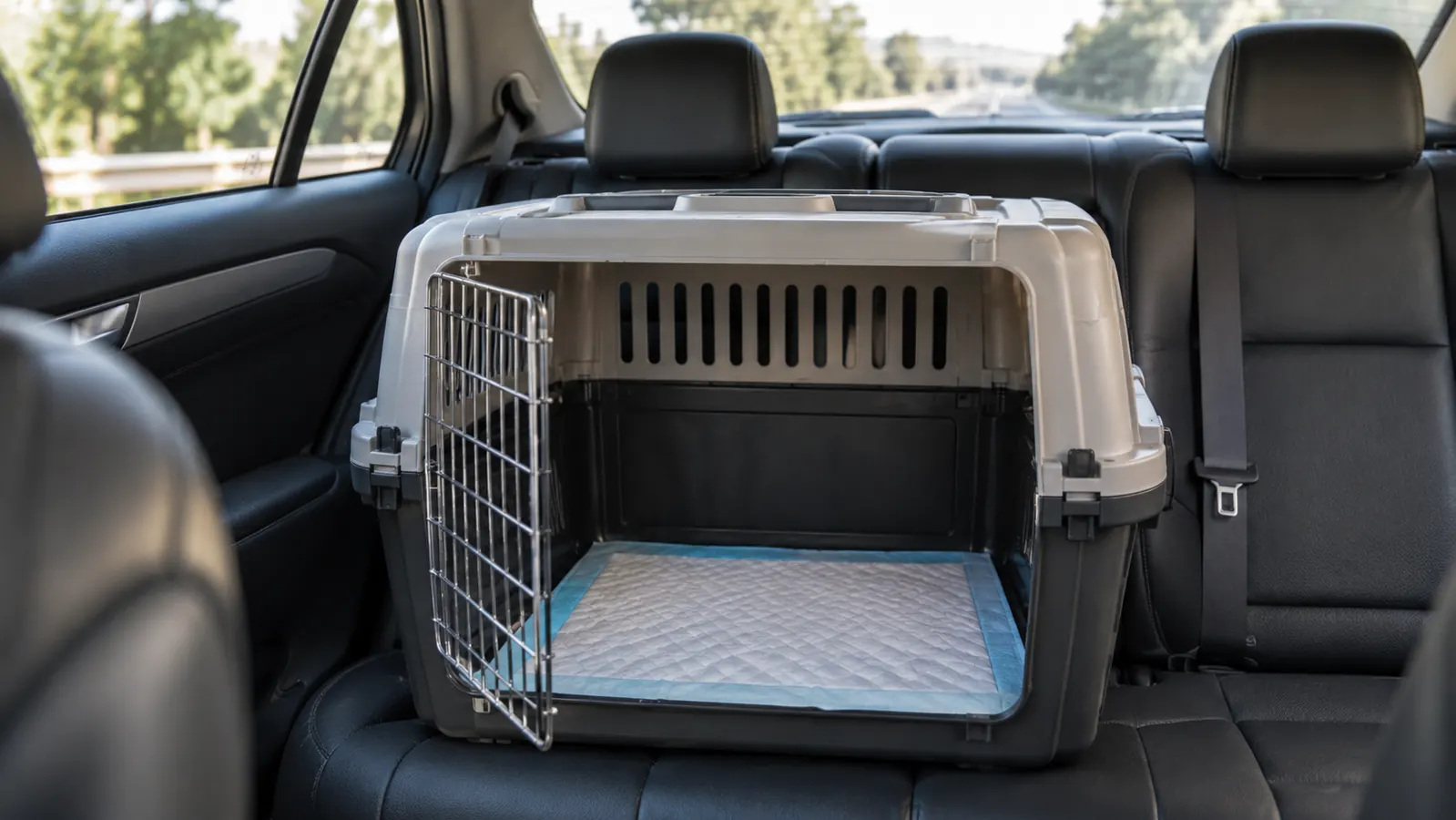
The pads are not just for floors. I lay a Glad pad in the car crate for the drive to Indiana, and it turns a potential mess into a non event. No scrubbing plastic in a gas station parking lot with a puppy on a leash in the other hand. This is the smallest use I get out of a box and the one I am quietly most grateful for, because car cleanup is the worst kind of cleanup.
It works with a tray you probably already have
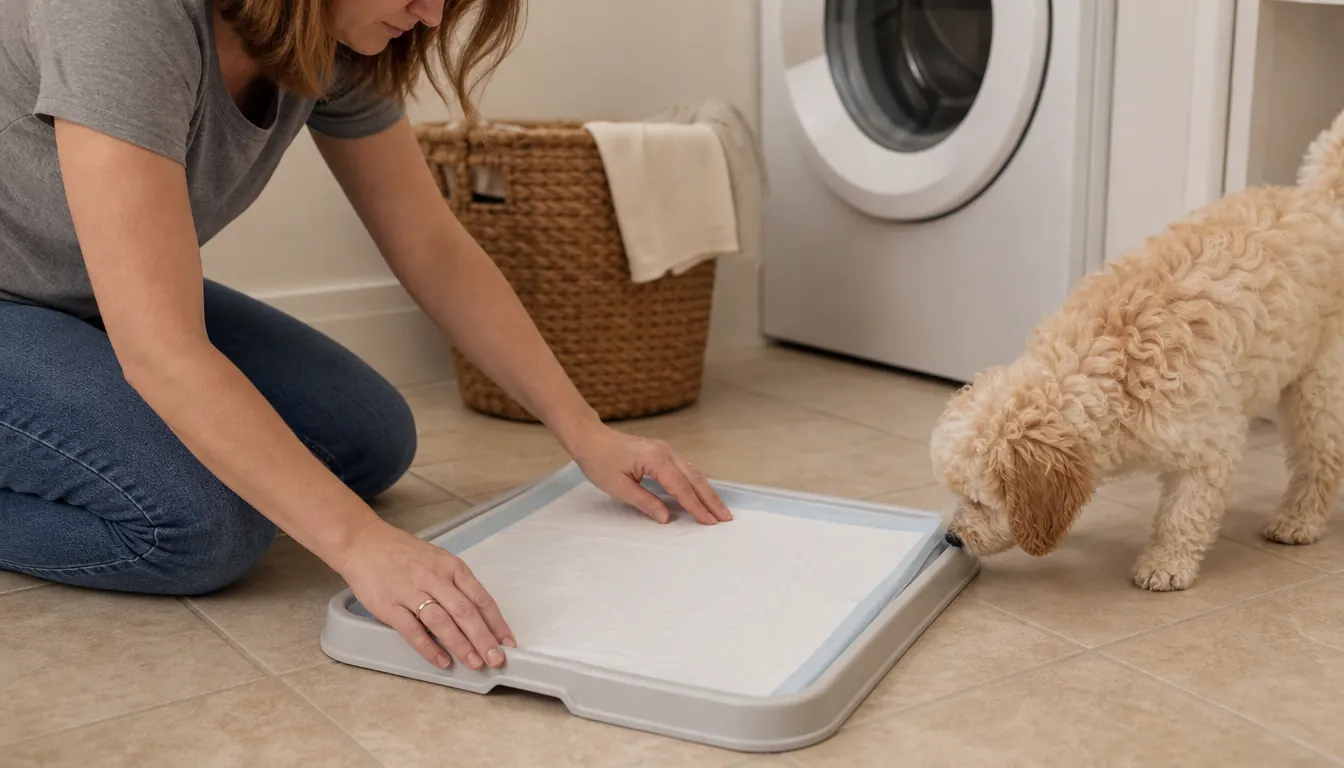
Clover shredded a corner of a pad twice as a young puppy, which is normal and also maddening. I fixed it with a plastic pad holder tray I picked up at a neighbor's yard sale, and the pads drop into it without any fiddling. If you have a chewer, buy the tray before you buy more pads. It also stops the pad from sliding when a puppy does that thing where she grabs it and drags it three feet across the tile.
It made the move to outdoor training easier, not harder
There is a school of thought that says pads teach a puppy to go inside the house. That was not my experience, but I also did not leave a pad in the middle of the living room. The station stayed in the laundry room, and the pad was the backstop for accidents that happened on the way out the door. By mid July, Clover was going out on her own schedule and the pads moved to the backup spot. They covered the gap. They never replaced the training.
What I'd Skip
I would skip the jumbo size if your puppy is small, because 23 by 23 inches is already more pad than a nine pound puppy needs. I would skip anything scented, since the carbon is doing the odor work and I would rather not stack a perfume on top of it. And I would skip buying three boxes before you know your puppy's habits. I did that, and I am still working through the last one. Start with one box and one tray, watch a week, then stock up like you mean it. One more thing worth saying plainly: if your puppy is having accidents far more often than seems normal, or the urine smells stronger than it should, that is a question for your own vet, not for a pad review.
Four boxes in, the hallway outside the laundry room stopped smelling like a dog lived here. That was the carbon, not the air freshener I stopped buying.
The one thing I would buy again before the puppy even walks in the door
Standard 23 x 23 inch, 50 count, activated carbon and a backing that holds. If you are bringing a puppy home this month, this is the box I would put on the shelf first.
Amazon Check Today's Price on Amazon →