
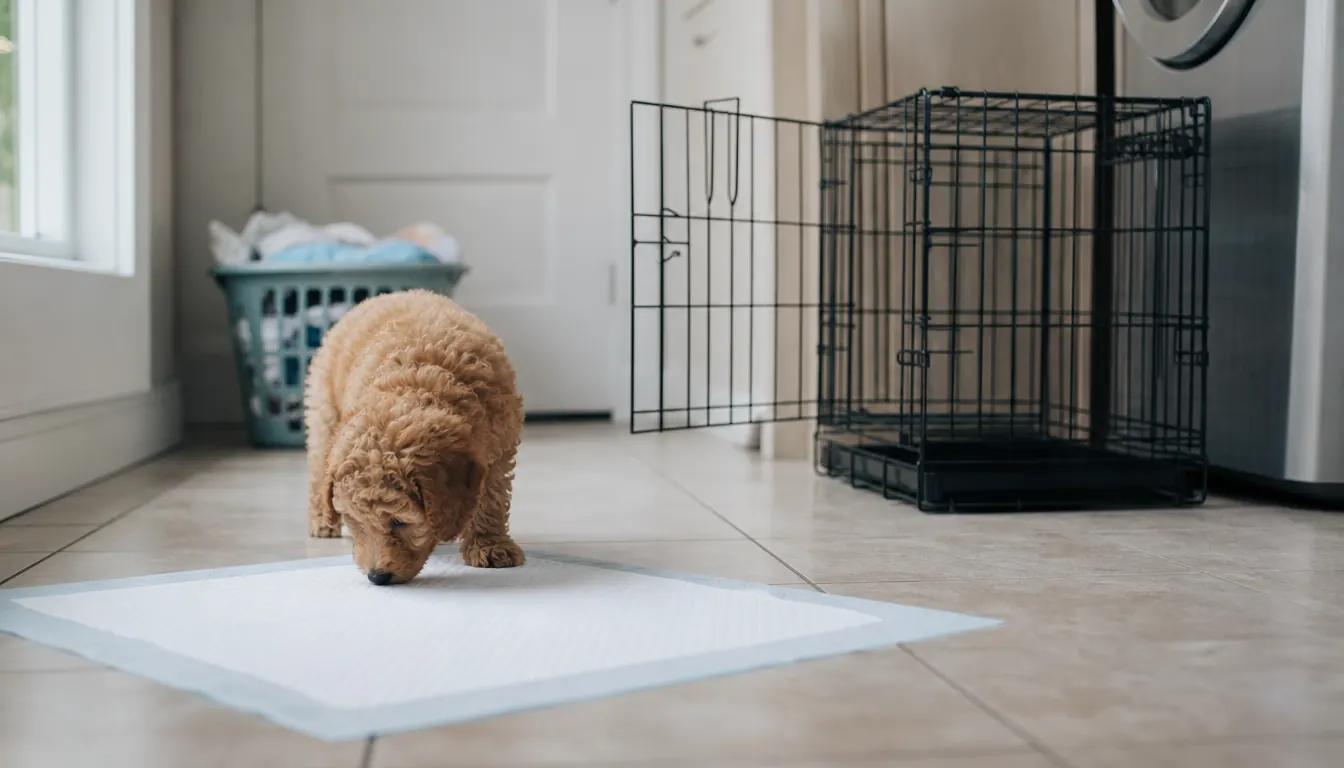
Clover came home on a Sunday in April at nine weeks old and six pounds, and by Tuesday morning my laundry room smelled like a kennel that had not been cleaned since spring. I ordered a 50 count box of Glad for Pets Puppy Pads the week before she arrived, partly on the advice of a friend who had already survived one puppy and partly because I did not want to be the woman driving to the store at six in the morning on day three. That first box sat on the tile next to the crate and turned out to be the least exciting purchase of the whole puppy year, which is exactly the compliment a potty pad should earn.
I am not a trainer and I am not a vet. I am a dental hygienist outside Columbus, Ohio, I work four days a week, and I had one puppy to raise and a low tolerance for a house that smelled like a kennel. Over the past several months I have bought four boxes of these pads, used them hard through the whole house training stretch, and then kept buying them for the smaller jobs they turned out to be good at. Here is what I actually noticed, including the parts that annoyed me and the two times I wanted to toss the box across the room.
The Quick Verdict
Fast absorption and a carbon layer that genuinely kills the laundry room smell. The 23 x 23 inch standard size runs small once your puppy passes about 20 pounds, and a teething puppy can peel a corner open.
Amazon Check Today's Price →The pad that shut my laundry room up for good
Standard 23 x 23 in, 50 pads per box, five layers with an activated carbon layer. This is the box I bought first, and the one I kept reordering.
Amazon Check Today's Price on Amazon →How I've Used It
My setup was simple. One pad on the laundry room tile, about two feet from the crate door, changed the moment it was used. In the first few weeks that meant two or three pads a day and one at two in the morning. I did not teach a formal pad command. I carried her over when I caught her circling, praised the result, and then started carrying her outside instead as soon as her shots were done and the weather allowed it. The pads were never the plan. They were the floor under the plan.
The first ten days were the heaviest stretch of the whole thing. The worst was a rainy Saturday in late April when every trip out the back door ended with a six pound puppy sitting on the step and staring at me, and I went through nine pads between seven in the morning and ten at night. I remember the number because I counted them into the bin out of pure frustration. After that the count fell to three a day, then two, and by the middle of May I was changing one overnight pad and one daytime pad and nothing else.
That distinction matters for how you read this review. If you want a pad that teaches a dog to go indoors forever, no pad does that and this one is not trying to. If you want something that catches the accidents while the real training happens outside, that is the job these did, and they did it without soaking through to the grout. I never once had to get on my hands and knees with a rag under a pad.
One pad at a time, not a layered spread. The listing says the polymer layer locks liquid away inside the pad, and in my experience that held. On the two occasions I doubled up because I was leaving for a long shift, the top pad was the only one that got used anyway. I also learned to keep the pad slightly away from the crate wall, because a pad pushed flush against the wire meant a corner got pulled through and chewed. I measured that clearance once with the tape measure from Dan's toolbox, because I could not believe such a small thing mattered, and both chewed pads had been sitting within a few inches of the wire. Two feet of clearance, pad flat, done.
By mid July, Clover was reliably going outside and the pad station came up off the floor. That was roughly three months of primary use, which came to about two boxes. Since then I have kept one pad by the back door for storm nights, because she will not go out in thunder, and one in the car crate for the long drive to my in-laws in Indiana. Four boxes in total, and the fourth Glad box is still half full.
What the Five Layers Actually Do
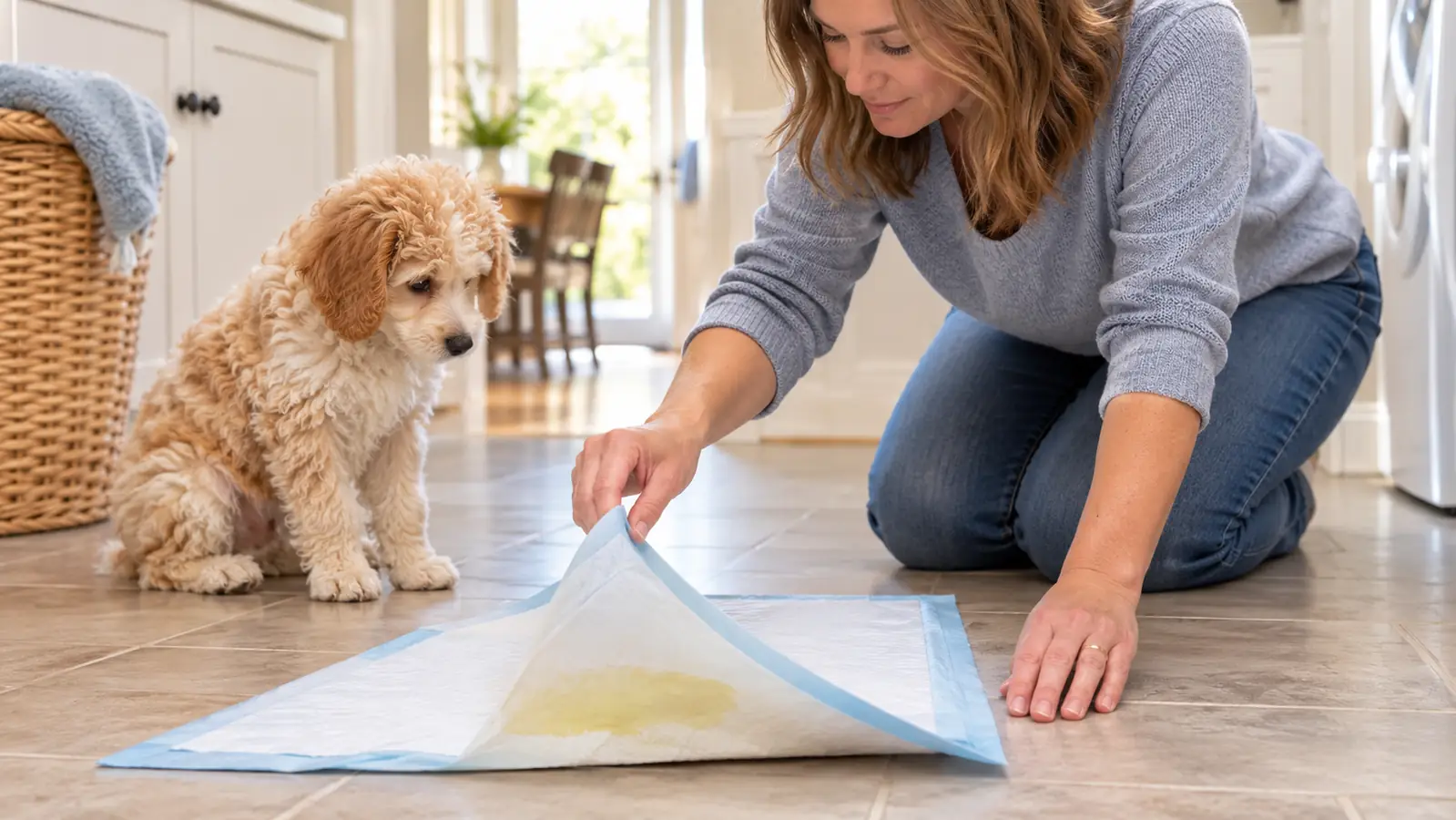
The listing describes five layers, and the two that matter to a person standing in a laundry room are the activated carbon and the ultra absorbent polymer. The polymer is what pulls the liquid in and holds it inside the pad instead of on top of it. The carbon is what addresses the smell. Everything else in the stack is there to keep those two doing their jobs and to keep the whole thing from coming apart when a wet puppy walks across it.
The smell part is the reason I kept buying this box instead of whatever was cheapest. Puppy urine in a warm laundry room is a specific odor that gets into the walls. With these pads, the laundry room smelled like laundry. I noticed it most on the mornings after I had forgotten to take a used pad out to the bin the night before, when instead of walking into a wall of ammonia I walked into nothing much at all.
The absorption speed is real too. The listing claims under 15 seconds, and in practice the surface was already dry to the touch by the time I walked from the laundry room back to the kitchen. That matters more than it sounds, because a puppy who steps in a wet pad then walks across the house distributes the problem. I have stepped on one of these in socks at five in the morning and been mildly surprised rather than horrified. The one I remember was a Tuesday in May, still dark, no coffee yet, and I put my whole foot down on a pad she had used maybe ten minutes earlier. I felt the top layer and nothing else. That is the entire test I care about at that hour.
The listing also says the pad stays fresh and dry twice as long as a standard pad and provides up to 12 hours of use. I never left one down for 12 hours on purpose, but the overnight pad from ten at night to six in the morning was not the thing that smelled when I picked it up. My puppy was.
Several Months In: What Held Up and What Didn't
The single biggest failure happened twice, both during the teething months, and it was entirely my puppy's fault and partly mine. She peeled a corner of the pad up with her teeth, found the fluff inside, and pulled. Once a pad is opened up, the core is done and the fluff ends up across the floor like the stuffing from a cheap couch cushion. The fix cost me nothing. I already had a plastic pad holder tray from a neighbor's yard sale, and putting the pad inside the tray meant there was no loose corner to grab.
What held up was the size honesty. The pads are 23 by 23 inches, which the listing calls the standard size and recommends for puppies and small dogs. That is accurate. At six pounds Clover had room to spare. At twenty one pounds she covers most of the pad and a miss is more likely. I know that precisely because I weighed her on the bathroom scale in early October and then set down a fresh pad and watched her use it, and her back feet were off the edge. She is not a big dog and never will be. A Labrador puppy at four months would have been past this size already. If your puppy is heading past about 25 pounds grown, the jumbo size at 28 by 30 inches is the one to look at, and I would buy that instead of this if I were starting over with a bigger breed.
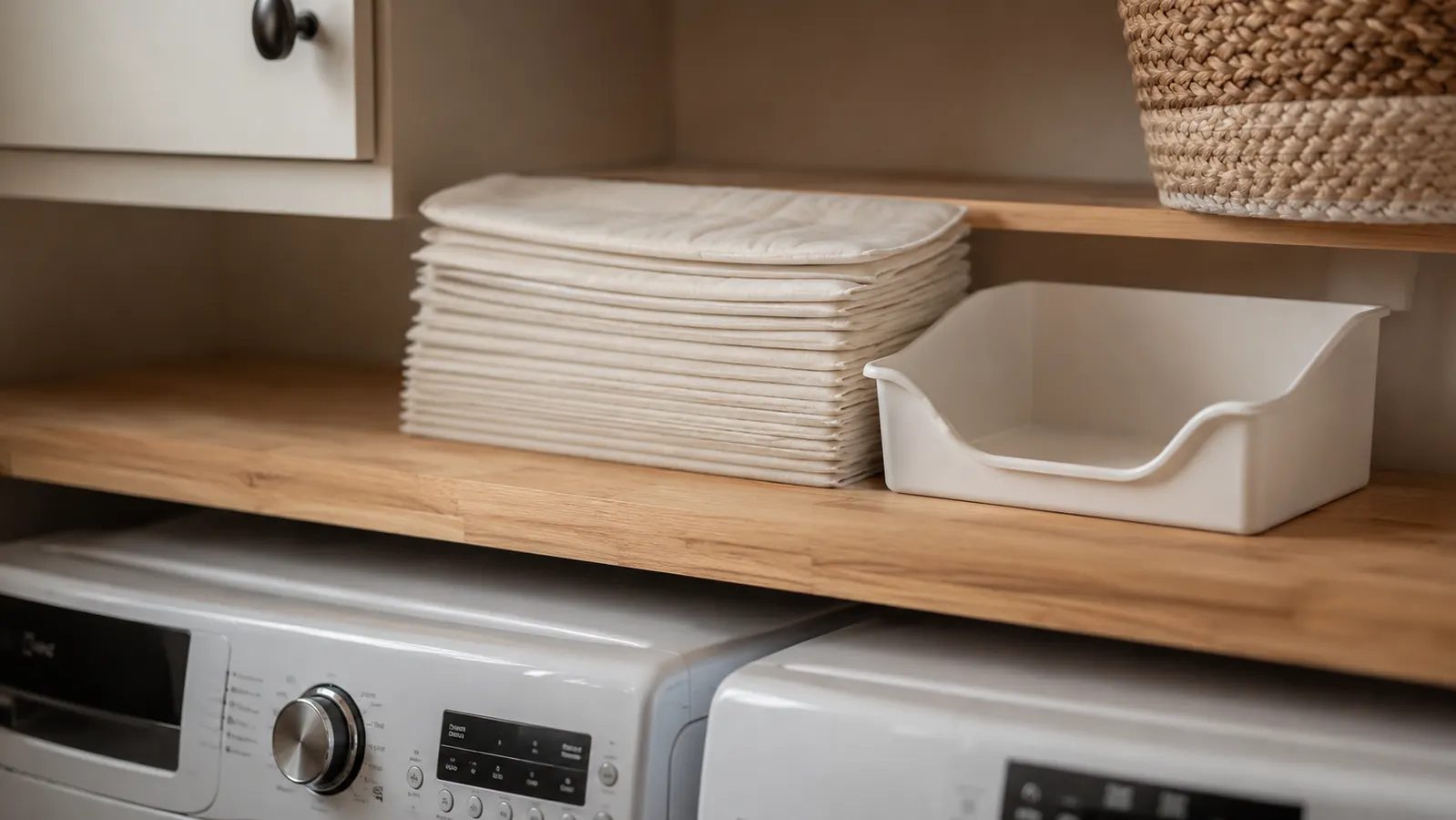
The other thing that held up was how little fuss there was. Fifty pads in a box means I was never rationing. I never had a pad tear when I picked it up wet, which I cannot say for the thin pads my mother used for her old beagle years ago. And the box itself is small and light enough, around three and a half pounds, that it lives on the shelf above the washer without any drama.
The carbon layer is the entire reason I stopped noticing my own laundry room. That is a strange thing to be grateful for, and here we are.
What I Got Wrong
I assumed a pad was a pad and that a box would last a while. The first box lasted about five weeks, which sounds generous until you are changing two or three a day. I also assumed I could leave one down all day while I was at work and deal with it when I got home. That was a bad idea for two reasons. A used pad sitting for nine hours is exactly the smell the carbon is trying to address, and a bored puppy with a loose pad corner will find it. Change them often, and use the tray.
The bigger thing I got wrong was treating the pad as the training instead of the backup. For about a week in late April I was letting her use the pad inside and only taking her out when I felt like standing in the cold. That is a great way to teach a puppy that indoors is fine. Once I flipped it and started carrying her outside every hour, treating the pad as insurance, everything moved faster. If I could go back and give myself one instruction it would be that. The pad catches. The yard teaches.
The Overnight, the Car Crate, and the Thunderstorm Backup
Once house training was done I assumed I was finished with Glad pads. I was not. Clover will not go out in a thunderstorm, and central Ohio gets a handful of those every summer. On those nights I lay one pad by the back door and she uses it without any confusion, which tells me she was never trained to the pad. She was trained to the spot.
The car crate pad is the one I did not expect. The drive to my in-laws in Indiana is long enough that we stop, but not long enough that I want to gamble. It runs about three and a half hours with one stop at a rest area, and the pad goes into the bottom of the car crate before we pull out of the driveway in Columbus. One pad, and the crate is still usable if something happens. It has happened once. I was very glad about the pad and I would like to never discuss it again.
Four boxes over roughly seven months is what that adds up to, and I am not done. I will buy another when this one runs out, because the backup jobs are not going away and a box lasts a long time at this rate. That is the honest picture of the value. It feels like a lot at the front end when you are buying a box every few weeks, and then it feels like nothing on the back end when one box lasts a whole season.
What I Liked
- Absorbs in under 15 seconds per the listing, and in practice the surface was dry before I finished walking back to the kitchen
- The activated carbon layer is the reason the laundry room stopped smelling, even on mornings I forgot to take a pad to the bin
- Five layers with a polymer core, and nothing soaked through to the tile in my case
- 23 x 23 inch standard size fits a small crate footprint and the bottom of a car crate
- 50 pads per box meant I was never rationing during the two or three pad days
Where It Falls Short
- 23 x 23 inches runs small once your puppy passes about 20 pounds, and a miss gets more likely
- A teething puppy can peel a corner and pull the fluff out, which happened twice to me
- No holder included, so a plastic tray is worth having before you start
- The box only comes in counts this size, so a small dog household ends up storing a lot of pads
Who This Is For
New puppy owners in the middle of house training, especially anyone bringing a puppy home in cold or wet weather when a trip outside every forty minutes is genuinely miserable. Owners of small and medium puppies, since the 23 by 23 inch size is right for that range. People who want an overnight option that does not leave the room smelling like a kennel by morning. Anyone with a senior dog who cannot always make it to the door. Cat owners and small animal owners who need a disposable mat. And anyone who, like me, wants a pad on standby for storms and car trips long after training is finished.
Who Should Skip It
Skip the standard size if your puppy is going to be over about 25 pounds grown. The jumbo at 28 by 30 inches is the better buy and I will not argue about it. Skip disposable pads entirely if you want a washable option, because a reusable pad is a different product with a different set of tradeoffs, and I have never owned one so I will not pretend to compare. Skip any pad, this Glad box included, if you are not going to put it in a tray or a holder and your puppy is a chewer, because you will be picking fluff out of the rug. And skip it if you are hoping the pad will do the training for you. It will not. It catches accidents while you do the actual work.
Still the pad by my back door, four boxes in
50 pads per box, standard 23 x 23 in, five layers with an activated carbon layer. Check today's price and see whether the current box is the same one I keep reordering.
Amazon Check Today's Price on Amazon →