
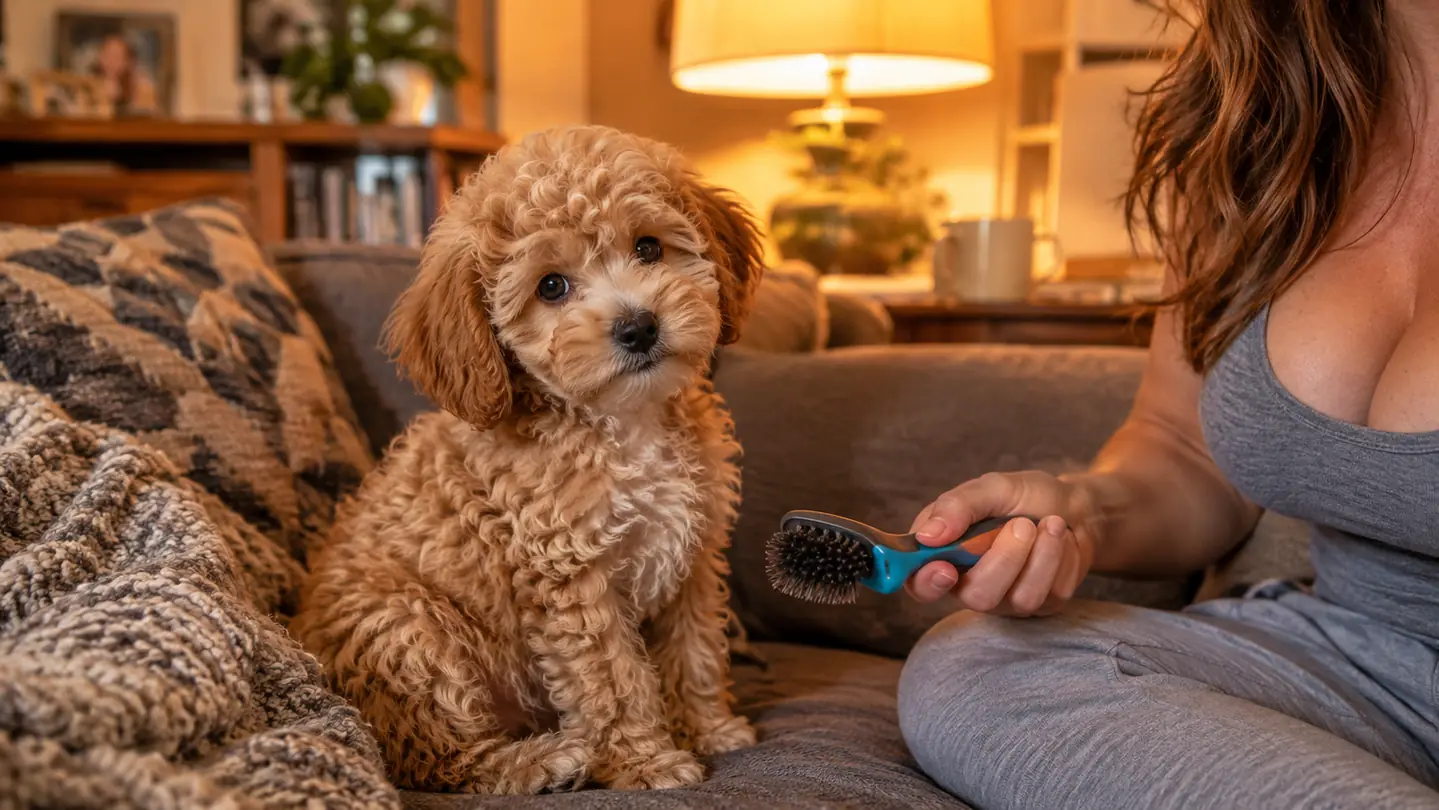
Clover came home on April 12 at nine weeks old, and for the first month I brushed her with a plain steel comb I picked up on an early pet store run. It was fine on her head. Everywhere else it was like pulling a fork through a knot of yarn. She would twist, I would hold on, and we would both end up annoyed. By the first week of May the coat behind her ears had started to felt. On May 9 I ordered the Coastal Li'l Pals slicker brush. Five months later it is the tool I reach for most evenings, and the comb lives in a drawer as a spot checker.
To be fair to combs, they do one job a brush cannot: they find what you missed. Run a comb over a finished coat and it will stop dead on a tangle the slicker glided right past. But for the daily work on a soft, dense puppy coat, five minutes with the slicker covered more than fifteen with the comb ever did. Here are ten reasons I would hand a new puppy owner a slicker before a comb, in the order I actually noticed them.
The five minute brush that keeps a puppy coat ahead of the tangles
Coated wire pins on a light plastic handle, sized for small breeds and puppies. It does the daily work. The comb just checks it.
Amazon Check Today's Price on Amazon →The pins flex against the body instead of scraping across it
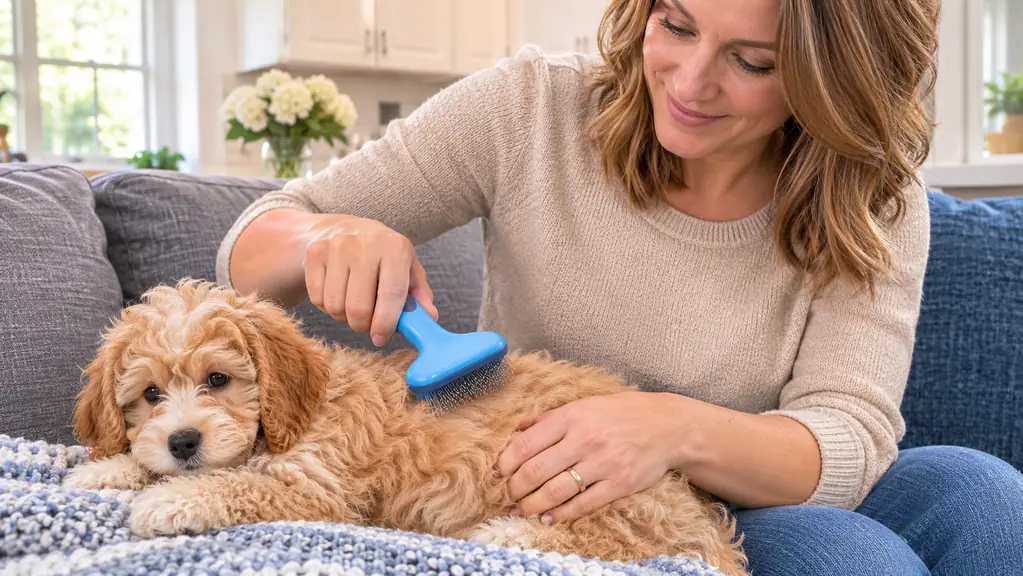
A slicker is a pad of fine wire pins, and on the Coastal brush those pins are set so they give when they meet the curve of a shoulder or a hip. That is what the listing means by flexible. My comb has one angle and one stiffness. On a puppy who shifts every four seconds, the comb's teeth caught while the slicker's pins rode over. The first evening I used it, Clover stopped trying to leave. That was the whole test, honestly.
Coated tips matter the moment your puppy jerks
Each pin ends in a plastic tip instead of bare wire. That sounds like a small detail until you are working near a back leg and your puppy suddenly changes her mind. Clover still hates having her paws touched, five months in, and she will pull a foot away mid stroke. The coated tips mean a sudden movement ends with a bump instead of a scratch, and I am not raising a dog who expects the brush to hurt.
It is sized for a puppy, not a show ring
The Coastal brush measures 3.25 by 7.25 inches and weighs under an ounce. I have small hands and short nails from my job, and I can hold it in one hand while the other hand keeps Clover steady and feeds her treats. A bigger brush would have been one more thing to wrestle with. This one fits my palm and reaches where I point it, which is the entire job when the target is a moving seven month old puppy.
It reaches behind the ears, where the matting starts first
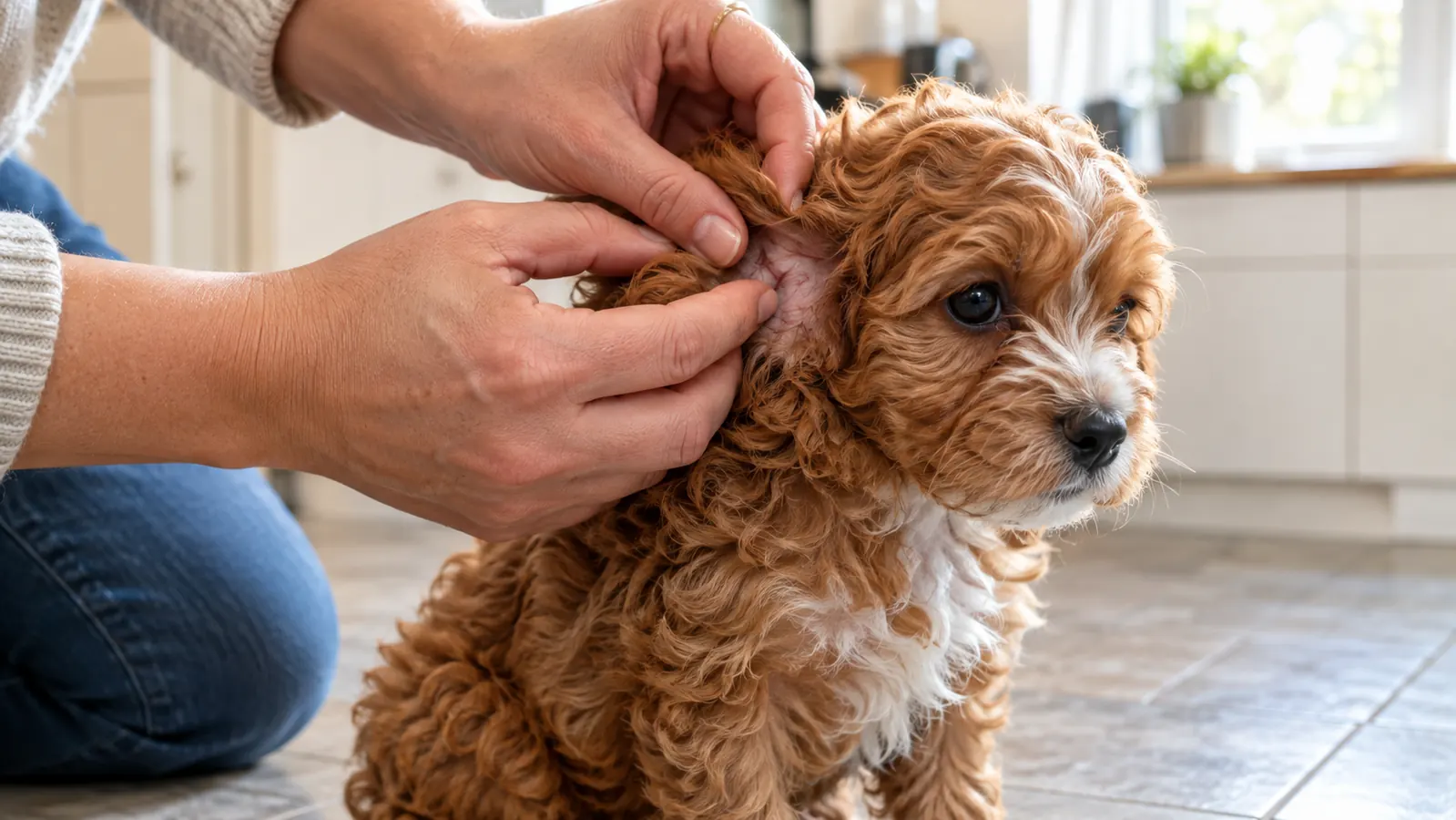
The coat behind Clover's ears went from soft to slightly felted in about three weeks. That is where I first noticed a problem, and it is the first spot the groomer mentioned on August 22. A comb skated across the top of it. The slicker's pins get underneath. That patch now gets thirty seconds every evening whether or not anything looks wrong, and it has stayed smooth since. Ask your own groomer where your puppy's trouble spots are and start there.
Five minutes on the couch beats a long session she will fight
We do this most evenings, on the couch, with a small bowl of treats. Five minutes, sometimes less if she is tired. Short sessions mean she never has time to get fed up, and the treats mean she now walks over when she sees the brush coming. Twenty minutes with the comb, which is roughly what the first month looked like, ended with both of us frustrated. Consistency over duration is the lesson I would pass on to anyone starting this week.
The groomer's only real note on August 22 was to keep brushing behind the ears and under the front legs. The slicker is the tool that turns those two spots into a five minute job instead of a fight.
It pulls the loose fuzz out before it lands on your rug
Puppy coat sheds in a way that is hard to describe until you live with it. Fine hair, everywhere, on everything. The slicker pulls the loose stuff out of the coat and holds it in the pins, and I tap it into the bathroom trash when I am done. One pass collects more than the comb did in a week. If you are already vacuuming twice as often as you used to, this is the reason to keep brushing instead of waiting for bath day.
It lifts the coat so you can actually see the skin
A comb tells you the surface is smooth. A slicker lifts the hair away from the body, which is how you spot a flake of dry skin, a burr from the backyard, or a patch that looks irritated before it becomes a bigger deal. I am not a groomer and I do not diagnose anything. If something looks sore, I stop brushing and call our vet clinic. But I only see it in the first place because the brush parts the coat instead of pressing it flat.
It works the whole coat, not just the top inch
The listing says the brush suits all coat lengths, and the pins are long enough to get under Clover's apricot layer without digging. That matters, because a slicker that only skims the top leaves the undercoat to do whatever it wants. One tool, and I cover back, sides, chest and tail in a single sitting. I do not own a second brush and have not needed one. If your puppy grows into a much longer coat than expected, your groomer can tell you whether to add anything.
It turns handling practice into something your puppy tolerates
Clover hated having her paws touched from day one. Brushing her back is easy. Brushing near a leg is a negotiation. Doing it every evening in short bursts, with a treat after each leg, has slowly made her better about being handled. That is less a grooming win than a life win. The groomer, the vet, and anyone who ever has to check a paw will have an easier time because we practiced on the couch at home first.
One tool that will still fit when she is full grown
The breeder expects Clover to land somewhere between 25 and 30 pounds. She is about 21 now. This brush is made for small breeds and puppies, and it has not run out of room on her yet. Compared with the specialty tools and full grooming kits on the shelf, one small brush that does the daily job plus one cheap comb that checks the work is a sensible place to start. You can always add later. You rarely need to start with more.
What I'd Skip
If I were doing the puppy year again, I would skip buying a comb first as my main tool. It cost little and it taught me the comb-first routine, which was a month of wrestling matches I did not need. I would also skip the pin brushes I looked at in the pet store aisle. I never bought one, so I am not going to tell you it fails. What I can tell you is that the pins looked like they would slide over the top of Clover's coat without reaching anything, and I left them on the shelf. And I would skip anything that turns grooming into a project. Short, boring, every day. That is what worked here. If your puppy has a skin issue or a coat condition, talk to your vet before you start a new routine.
One small brush, five minutes, most evenings
The Coastal Li'l Pals slicker has done the daily work on Clover's coat since May, with coated tips for a puppy who moves. The comb still lives in the drawer for spot checks.
Amazon Check Today's Price on Amazon →