
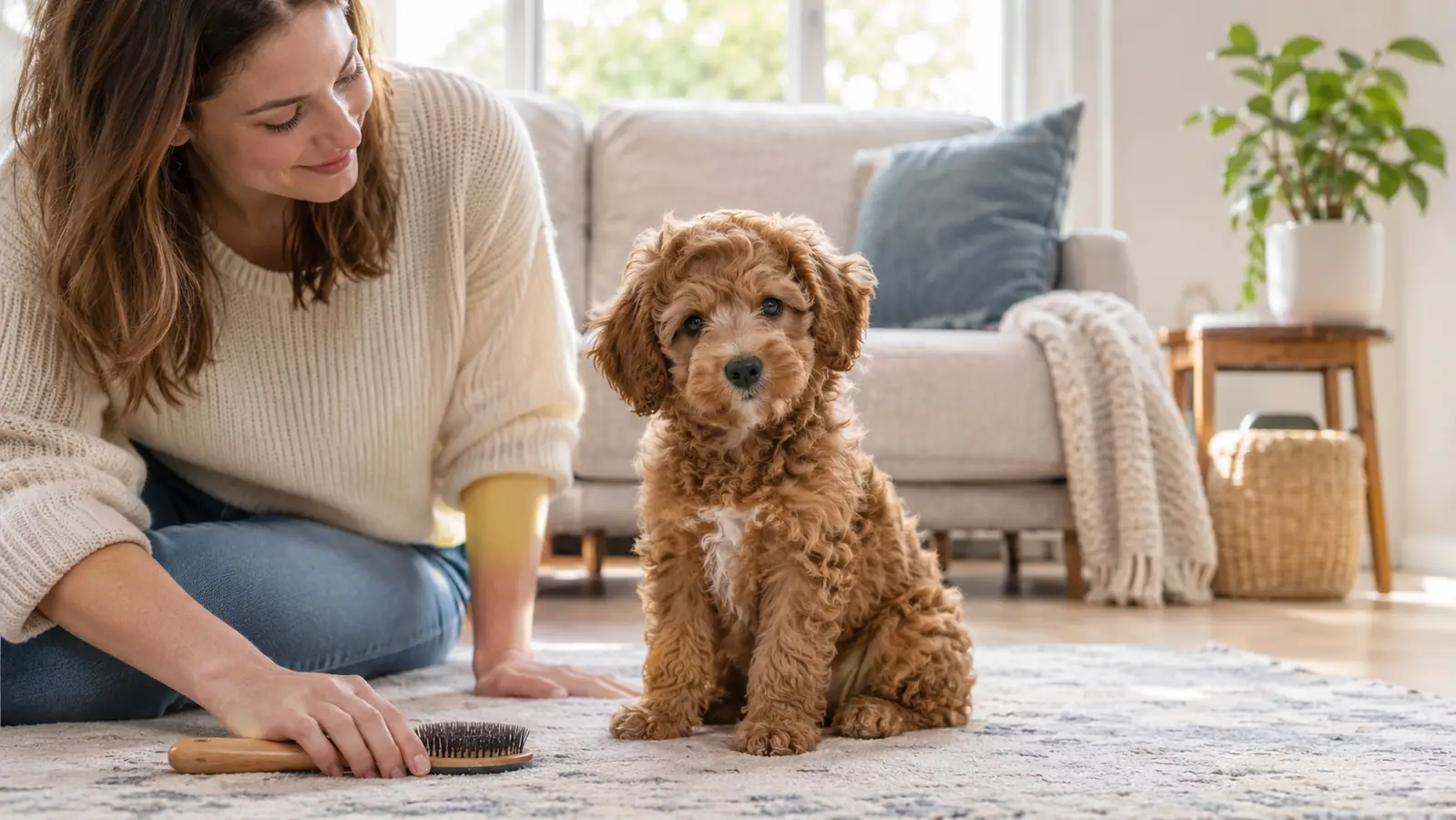
The short answer is the Coastal Pet Li'l Pals slicker brush, at least for a young puppy with a soft coat and a low tolerance for being handled. I bought the Coastal brush for Clover, my seven-month-old mini goldendoodle, on May 9, 2026, when the fur behind her ears started to tangle after our evening walk. She was about three months old then. A pin brush is not a bad tool. It is just a different tool, and for a wiggly puppy who hates having her paws touched, the Coastal brush is the one I would hand a friend first.
Here is the short version. If you want one brush for a puppy's first year, a small slicker with coated tips is easier to control. If you already have an adult dog with a long, silky coat that mats close to the skin, a pin brush can reach deeper. The Coastal Li'l Pals sits in the first camp. It has a 3.25 by 7.25 inch rectangular head, a plastic handle, and flexible wire pins with plastic tips. It weighs 0.96 ounces. That size matters when your puppy thinks the brush is a toy and tries to eat it.
| Coastal Li'l Pals | Typical Pin Brush | |
|---|---|---|
| Size and handling | 3.25 by 7.25 inch head, 0.96 ounces, plastic handle. Small enough for face, paws, and short sessions. | Usually a larger head with longer pins. Covers more ground but needs more control. |
| Tip comfort | Flexible wire pins with plastic tips on each bristle. The listing says the tips will not irritate sensitive skin. | Rounded metal pins. Gentle with a light hand, but no plastic coating. |
| Coat reach | Flexible wire pins fit to the body and detangle the surface and mid coat. | Longer pins part the coat and reach closer to the skin in long, layered hair. |
| Coat type | Listing says all hair lengths. Works on a soft puppy coat and small breed coats. | Best on adult long, silky coats that tangle in layers. |
| Face and paws | Small rectangular head gets behind ears, under the chin, and around paws. | Bigger head and longer pins are harder to steer around a wiggly puppy's face. |
| Durability | Plastic handle and wire pins. Listing says quality guaranteed. | Often wood or plastic handle with metal pins. Long life depends on care and moisture. |
| Best for | A puppy's first brush, small breeds, and sensitive skin. | Adult dogs with long coats and owners who already have a grooming routine. |
What the Coastal Li'l Pals Brush Is
The Coastal Pet Li'l Pals Dog Slicker Brush with Coated Tips is a small slicker brush. The listing describes flexible wire pins that fit to a dog's body and plastic tips on each bristle. The head is 3.25 by 7.25 inches. The whole brush weighs 0.96 ounces, or 27.22 grams. The handle is plastic. The shape is rectangular. The listing says it detangles fur, removes loose hair, smooths the coat, and works on all hair lengths. It also says it stimulates natural oils. I am not going to pretend I can measure oil production on my couch. I can tell you the brush is light enough that my wrist does not ache after a five-minute session.
What I like about the Coastal brush is the plastic tip on each wire pin. Clover's skin is pink and easy to see through the cream and apricot coat. A brush with bare wire ends makes me nervous around her armpits and the inside of her back legs. The coated tips do not scratch the way I expected. I still use a light hand. A coated tip is not a license to press hard. But it gives me a little room for error while I learn where her tangles hide.
The small head is the other reason I reach for it. Clover is about 21 pounds now, and the breeder expects 25 to 30 pounds grown. She is not a large dog, but she is big enough that a full-size slicker feels clumsy on her face and paws. The Coastal head fits along her cheek, behind her ear, and down the back of her front leg. I can brush one small area at a time and stop before she starts to pull away. That is how we got from a ten-second struggle to a five-minute routine most evenings.
The Coastal brush is not a cure for a puppy who hates grooming. The first month was not cute. Clover treated the brush like a strange creature. I put it on the floor, let her sniff it, gave a treat, touched it to her shoulder, gave another treat. We built up from there. The brush did not fix her dislike of having her paws touched. It just made those short sessions possible. One professional groom on August 22, 2026, told me to keep working behind the ears and armpits. That is exactly where the small head helps.
What a Pin Brush Is
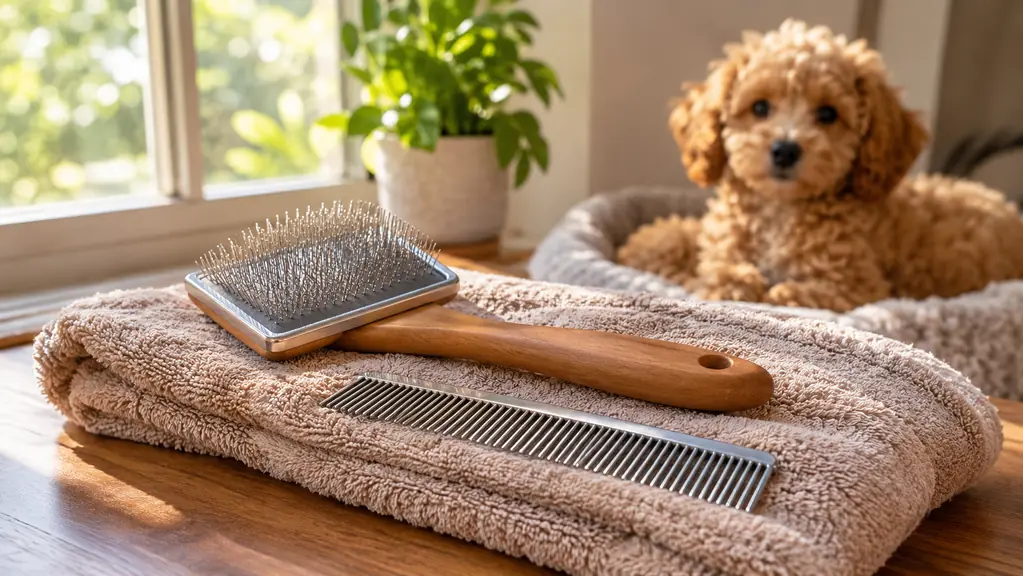
A pin brush is the other tool people mention when a puppy coat starts to tangle. It typically has a row of longer metal pins set into a cushion, often with a wooden or plastic handle. The pins are usually spaced farther apart than the wire pins on a slicker. The ends are rounded so they do not scratch the skin. A pin brush is designed to part the coat and reach down through longer hair. It is a good tool for an adult dog with a long, silky coat, especially one that mats close to the skin.
The pin brush I am comparing here is not one I own. I have never bought, borrowed, or returned one. I know it from the pet store aisle, from the groomer's table, and from my sister-in-law's dog, who has a long coat that needs a different routine than Clover's. So this is not a side-by-side test on my living room floor. It is a practical comparison from the perspective of a first-time puppy owner who has one brush in the drawer and has thought about whether a second one is worth it.
The appeal of a pin brush is reach. When a coat is long enough to tangle in layers, a slicker can glide over the surface while the knot sits closer to the skin. Longer pins can separate those layers. The tradeoff is that a pin brush can feel more pointed and less forgiving on a puppy who is still learning to stand still. You can absolutely use a pin brush gently. But if your dog is seven months old and thinks every grooming tool is a chew toy, the longer pins ask for more control than a small slicker does.
How I Use the Coastal Brush on a Puppy
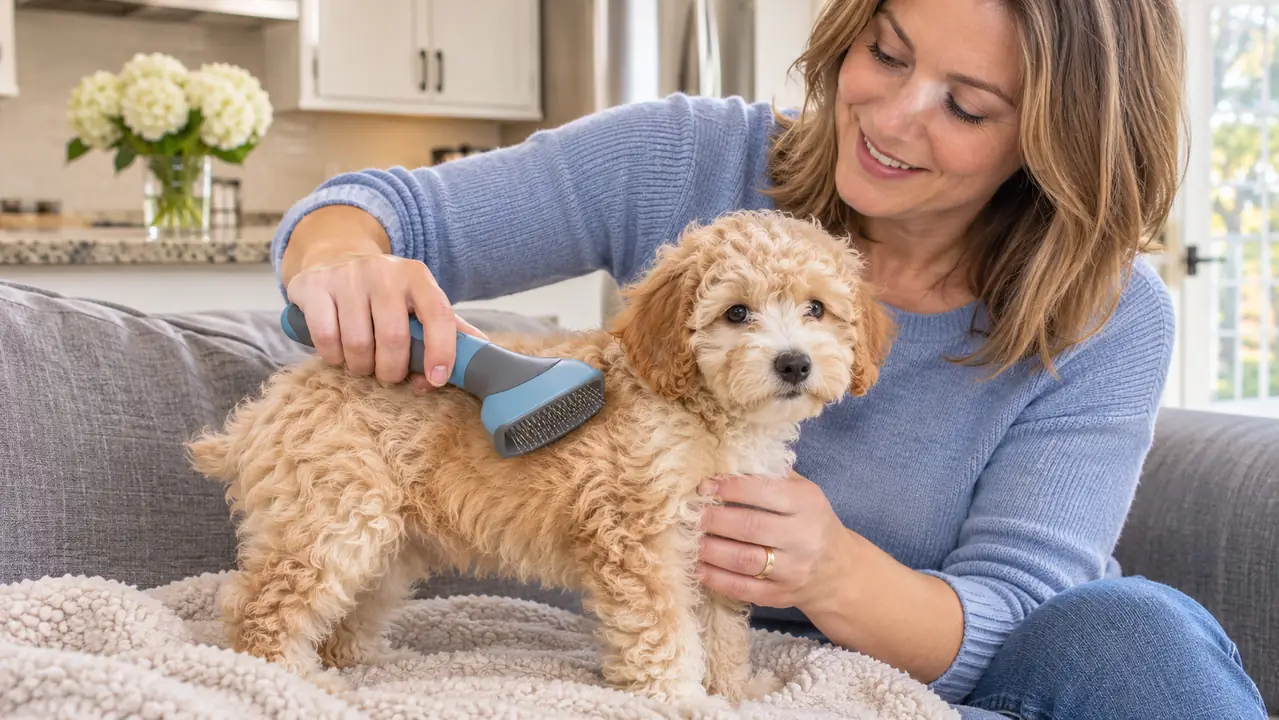
Our routine is short on purpose. Most evenings, after dinner and before Clover gets her last trip outside, I sit on the couch with a handful of treats and the Coastal brush. I start behind her ears because that is where the puppy coat tangled first. Then I do one armpit, then the other, then a quick pass down her back and tail. I save the paws for last, and I do not push it. Some nights she lets me do all four. Some nights I get one paw and a dirty look. Five minutes is the goal, not a full grooming session.
The technique that works for us is light strokes in small sections. I do not drag the brush through a tangle. I hold the hair near the skin with my other hand and work at the edge of the knot with the tips of the pins. The coated tips help here because I am not worried about scratching her when I angle the brush. After I finish, I run a cheap steel comb through the same spots to check for anything I missed. The comb is not a replacement for the brush. It is a second set of eyes.
Cleaning the brush takes about a minute. I pull the loose hair out of the wire pins with my fingers, then wipe the plastic handle with a damp cloth. The brush weighs less than an ounce, so it is easy to hold while I pick hair out of the head. I do not soak it or run it through the dishwasher. The listing does not say to, and I would rather not test a plastic handle that way. A quick clean after each session keeps the pins working and keeps the brush from looking like a felted dog toy.
Where Coastal Li'l Pals Wins
Where the Coastal brush has earned its place in my laundry room is handling. It is small, light, and coated at the tips. On a puppy, those three things matter more than a long list of features. I can hold the handle in my palm, rest the head on Clover's shoulder, and work in short strokes without wrestling her. The plastic handle is easy to wipe if it gets a little dog hair and treat dust on it. The rectangular head gives me a flat edge for the back and a corner for behind the ear. It is not fancy. It is easy to use.
The other win is comfort. The listing says the plastic tips on each bristle will not irritate sensitive skin. I cannot prove that for every dog. I can tell you that Clover stopped flinching at the shoulder within a couple of weeks. The brush still finds tangles. It just does not feel like a scrubbing brush on her skin. For a puppy's first brush, that matters. A tool that makes grooming feel like a fight is a tool that sits in a drawer. The Coastal brush gets used because it is the path of least resistance.
Where a Pin Brush Wins
A pin brush wins on reach through a long coat. If your dog has hair that hangs rather than curls, the longer pins can part the coat and get closer to the skin. That is useful for an adult dog with a silky coat that tangles in layers. It can also be useful for a puppy coat that is changing, though I would still start with a lighter touch. The pin brush is not the enemy. It is the tool I would pick if my problem was deep, layered tangles rather than a puppy who needs to learn that brushing is safe.
The pin brush also wins on coverage. A larger head with wider pins covers more of a long back in fewer strokes. That is a real advantage for a big dog or an adult dog that already stands well for grooming. With Clover, coverage is not the bottleneck. Patience is. A bigger brush would just give me more surface area to get wrong while she wiggles. If your dog is calm and has a long coat, the pin brush can do a job the Coastal brush does not do as well. That is an honest difference, not a knock on either one.
The Brush I'd Start a Puppy On
The Coastal Li'l Pals slicker brush is small, light, and coated at the tips, which is what makes it workable on a puppy who is still learning to stand still. It is the first brush in my drawer, not the only brush a dog will ever need.
Amazon See the Coastal Li'l Pals Brush on Amazon →The Tradeoffs I Noticed
The Coastal brush has two tradeoffs. The first is size. A small head takes more strokes on a bigger dog, and if you have a 70-pound dog with a thick coat, you will feel it in your shoulder. The second is that the wire pins fill with hair quickly. I clean mine after every session, which is not a big deal, but it is a step. If you skip it, the pins stop grabbing the coat the way they should. This is a small brush for small areas. It is not a shortcut for a full-body groom on a large dog.
The pin brush tradeoff is the opposite. It gives you more reach and more coverage, but it asks for a steadier hand. The longer pins can catch a tangle and pull if you rush. They can also feel more pointed on a puppy who is not used to being brushed. I would not hand a pin brush to a seven-month-old puppy and expect a calm five minutes on the first try. You can get there. It just takes more training. That is why I would start with the Coastal brush and add a pin brush later if a groomer says the coat needs it.
Who Should Buy Which
Buy the Coastal Li'l Pals brush if you have a puppy or a small breed dog, especially one with a soft coat, sensitive skin, or a habit of pulling away from the brush. It is also the better first brush if you are learning as you go, because the small head lets you work in short sections and stop before your dog has had enough. It fits the in-between stage too. Clover is 21 pounds and not a toy breed, and the head still fits her face, paws, and back legs. If you want one brush for the first year, this is the one I would put in the basket.
Choose a pin brush instead if your dog is an adult with a long, silky coat that tangles close to the skin, or if you already have a grooming routine and need more reach. A pin brush is also the better second brush for a dog whose coat has changed from puppy fluff to a longer adult coat. I would not buy both on day one. I would start with the Coastal brush, learn where your dog's tangles hide, and ask your groomer whether a pin brush would add anything. Your vet or groomer can tell you what your dog's coat actually needs. I am just a woman with a doodle and a laundry room full of dog gear.
Start With the Small Brush That Gets Used
A puppy brush only helps if you can use it without a fight. The Coastal Li'l Pals brush is the one that made five minutes on the couch feel normal in our house.
Amazon View the Coastal Li'l Pals Brush on Amazon →