
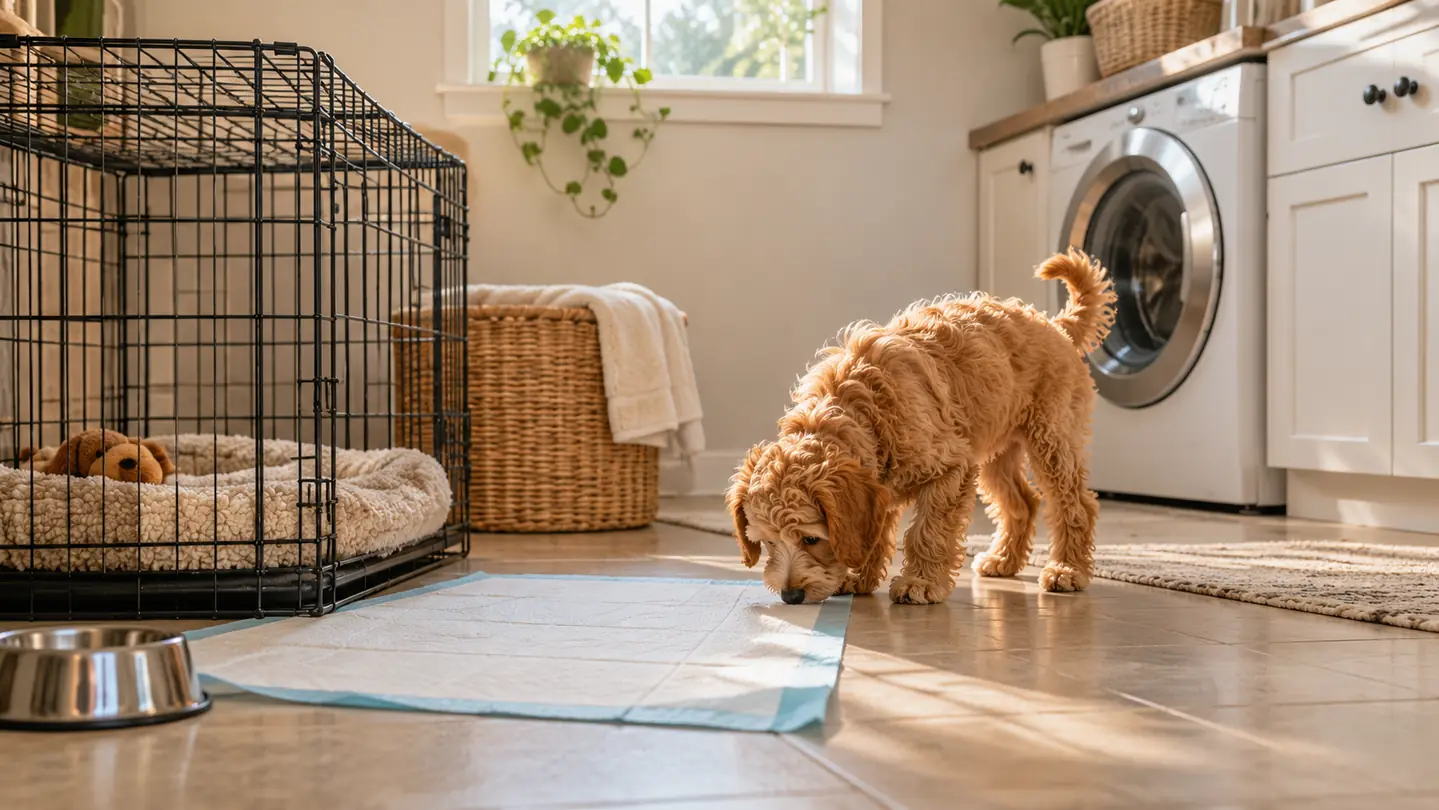
The first box of Glad for Pets Puppy Pads landed on my porch two days before Clover did. I had a crate, a stack of older towels, a bottle of enzyme cleaner, and a laundry room floor I could scrub without ruining anything. I thought that was the whole plan. Then a nine week old mini goldendoodle came home on April 12, 2026, and I found out that a puppy that young needs to go out roughly every ninety minutes while she is awake, and she does not care that you have to leave for work at eight.
What follows is the routine that took us from those first ten weeks to a dog who was reliably going outside by mid July. I am a dental hygienist outside Columbus, Ohio, not a trainer, and this is not a professional protocol. For anything health related, ask your own vet. What I can tell you honestly is what I did with four boxes of pads, one yard sale tray, and a puppy who treated the laundry room as a suggestion for the first month.
The box I reordered three times before I trusted a puppy outside
Glad for Pets Puppy Pads are 23 x 23 inches with five layers. The activated carbon layer pulls odor instead of covering it, the polymer layer locks liquid away in under 15 seconds according to the listing, and the listing also says the pad stays fresh and dry 2X longer. A 50 count box carried a nine week old puppy through her first five weeks, and I have bought four boxes in total.
Amazon Check Today's Price on Amazon →Step 1: Build the station before the puppy walks in the door
My laundry room sits off the kitchen, and that turned out to be the right spot by pure luck. It has a door I can close, a hard floor, and no rug for a puppy to ruin. The station was a wire crate against one wall with a pad area right beside it, close enough that a half asleep puppy could stumble from the crate to the pad at 3 a.m. without crossing the kitchen first. If you have a choice, pick the smallest hard floored room you have and keep the walk between crate and pad short.
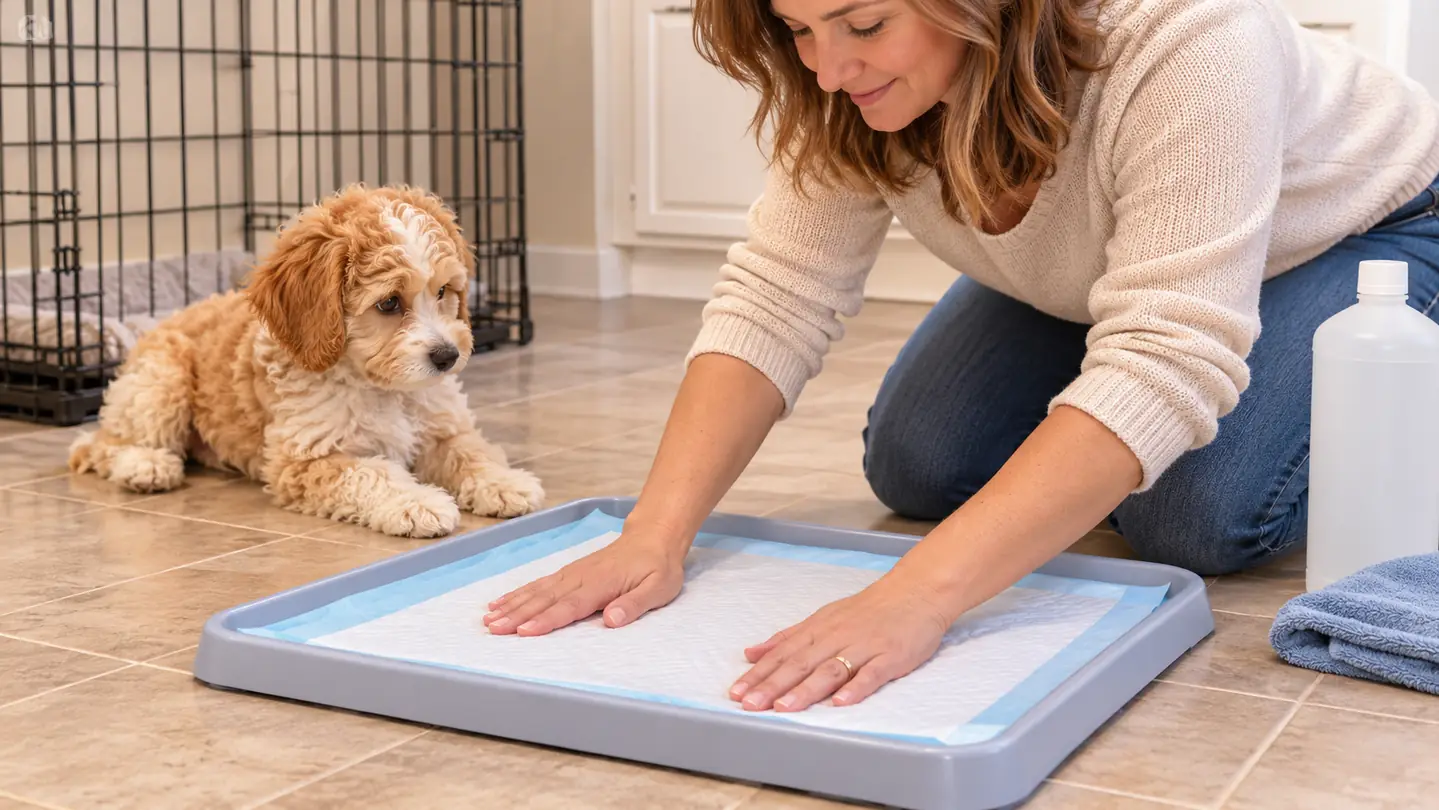
I laid the pad in a plastic holder tray I picked up at a neighbor's yard sale the summer before, back when I had no dog and no reason to buy it. The tray has a shallow lip that holds a 23 x 23 inch pad flat. This is the only pad accessory I own, and I did not pay much attention to it until the first week taught me why it was there.
The tray matters more than it sounds like it should. A pad laid loose on tile slides when a six pound puppy skids onto it, and a sliding pad becomes a game. Clover shredded a corner of a pad twice as a young puppy, and both times it was a pad I had set down loose while the tray was drying in the bathtub. If your puppy is a chewer, put the pad in something with an edge and supervise the first week.
Step 2: Take her outside first and let the pad be the backup
Here is the part I want to be straight about, because it is the part that gets skipped. A pad is not a replacement for going outside. It is what catches the misses while the puppy's bladder is the size of a walnut. Clover went out after every nap, after every meal, after every wild ten minutes of play, and right before bed, and she still had accidents. The pad caught them instead of the floor.
I learned her tells in about two weeks. She circled. She sniffed the floor in a tight spiral. She stopped mid play and got a faraway look. When I saw any of the three, we went out, and if we did not make it, the pad was three steps away instead of at the other end of the house. That distance is the whole reason the first month did not wreck my floors.
When she had an accident two feet from the pad, I did not scold her. I moved the pad two feet. That sounds small, and it was the single most useful adjustment I made. Puppies pick a spot. If the spot and the pad disagree, the pad should move, not the puppy.
Step 3: Pay her like it is a job
The first time Clover used the pad on purpose, I acted like she had solved a math problem. Praise within about two seconds, a small treat, and then straight outside so the good thing kept happening. Dan did the same on his work from home days, which mattered more than I expected. Two people using two different rules is how a puppy learns that rules are optional.
As she got steadier, the payouts moved. The pad got a calm good girl and nothing else. The grass outside got the treat and the party. That shift is the whole weaning plan in miniature. You are not training a puppy to use a pad. You are training a puppy to prefer the yard while the pad keeps your floor in one piece.
My mistake was the silent nights. For about a week I would stand in the dark at 3 a.m. waiting for her to go, say nothing, and carry her back to the crate, because I was tired and the floor was cold. She learned nothing from a silent witness. The night I started whispering praise and handing over half a treat, she started finishing faster.
The pad was never the plan. It was the bridge between a nine week old bladder and a dog who could hold it until I got home from work.
Step 4: Change the pad on a schedule, not on a smell
Glad pads are five layers, and the layer I care about is the activated carbon. It absorbs odor rather than adding a perfume on top of it. Our laundry room stopped smelling like a kennel somewhere in the second week, and the change was noticeable enough that Dan mentioned it without being asked, which is how I know it was real and not me going nose blind.
The listing says the pad absorbs in under 15 seconds and gives up to 12 hours of protection. In a house with a nine week old puppy, I changed pads at least once a day and often twice, because a young puppy drinks a lot at dinner and then tests every number on the package overnight. Once Clover was sleeping through, one pad overnight was plenty.
The shredding phase is real and it is not a pad defect. A bored puppy will test an edge. Mine did it twice, both times on a loose pad. If yours is tearing pads apart, the fix is supervision, a holder tray, and something legal to chew in the crate. A frozen KONG Puppy stuffed with softened kibble bought me more quiet mornings than anything else in the house.
Step 5: Wean her off the pad and keep one for the reasons you will actually need it
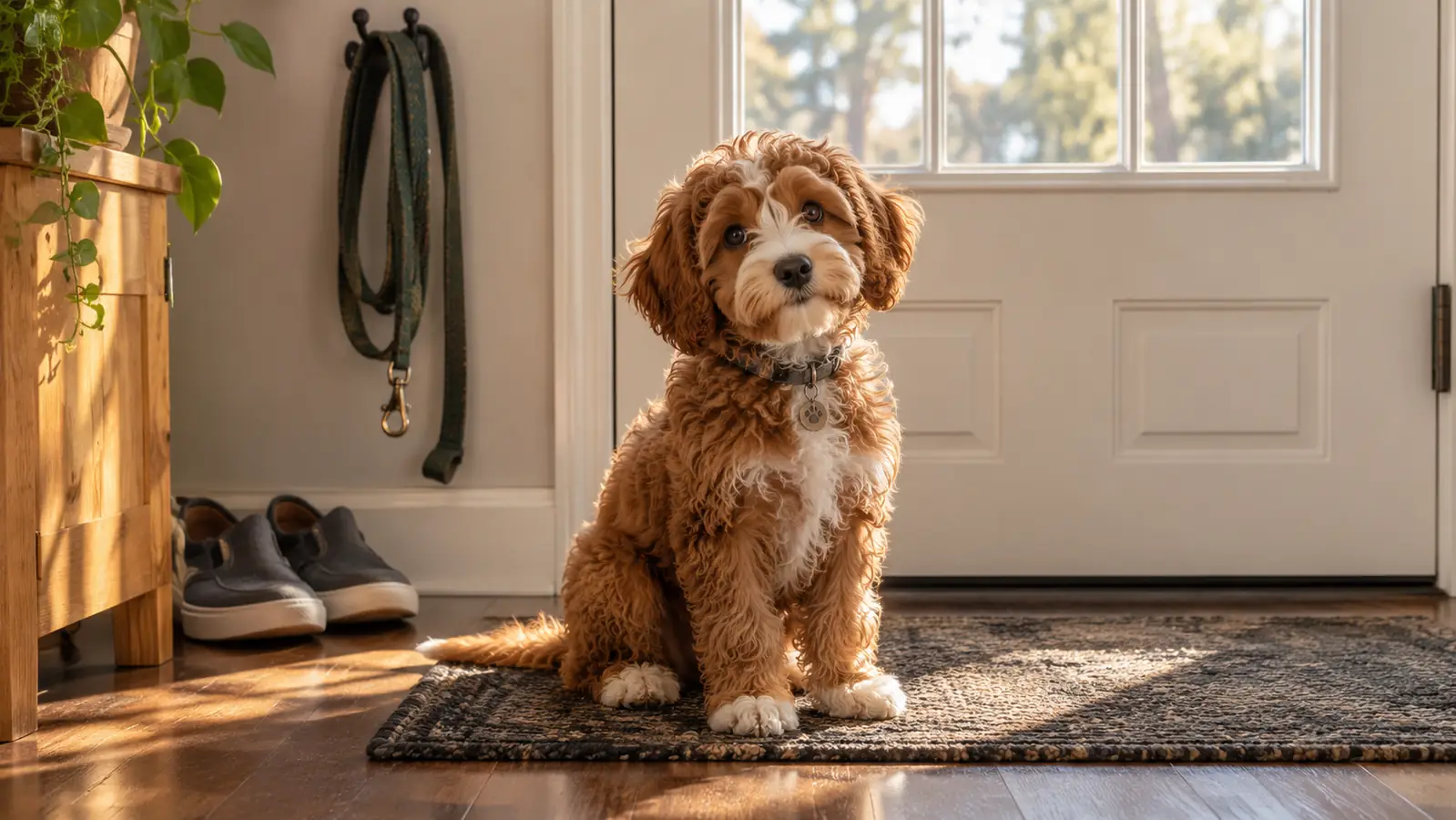
By mid July, Clover was reliably going outside and the pad station had turned into clutter. I did not pull it all at once. I moved the tray closer to the back door over about ten days, then set a pad on the porch for a week, then stopped. If she regressed, the tray came back for two days and we started again. Slow is faster here.
We still keep pads, just not for training. One sits by the back door for overnight and for thunderstorms, because a seven month old dog who is scared of thunder is not going to ask politely. One goes flat in the car crate for the long drive to Dan's parents in Indiana. That is the whole remaining job, and it is a small one.
Do not pull the pad early just because you are tired of buying them. A puppy who was solid for three weeks and suddenly is not usually got rushed. And if your puppy is going far more often than seems normal, straining, or having accidents after months of being clean, that is a vet call, not a pad problem.
The Three Mistakes I Made
I bought one box, not two. Fifty pads sounds like a lot until you are changing two a day through the first month with a puppy who thinks the pad is a suggestion. I was back online reordering in week five. Order the second box before you need it, and you will never have that Tuesday.
I rinsed the tray and left it drying overnight, which meant a loose pad, which meant a chewed corner and a puppy with a mouthful of padding before I got across the room. Now it gets rinsed, dried, and put back down in ten minutes, and the pad goes into it, not on the floor next to it.
I gave her the run of the kitchen too early. Freedom is a reward for a puppy who has not had an accident in two weeks, not something you hand over because she looked sad at the baby gate. We went back to the closed door for another ten days and both of us were happier for it.
What Else Helps
An enzyme cleaner for the hard floor, used every single time, not a regular household spray. Puppies follow their nose back to a spot, and a floor that still smells like urine is an invitation with a doormat.
A cheap notebook where I wrote down the times she went. After eight days the pattern was obvious. Awake, out within ten minutes, then roughly every ninety. I stopped guessing and started predicting, and the accidents dropped by about half in a week.
And help at midday. In the early weeks a neighbor teenager let Clover out while I was at the clinic, and Dan took the midday break on the days he was home. A puppy that age cannot hold it from eight to noon, and no pad fixes a five hour gap.
If I Were Starting Over Next Week
I would order the pads before the puppy, the way I did, and I would open the first box in the laundry room instead of the kitchen. I would put the tray down on day one instead of day eleven. And I would set a phone alarm for the first three nights instead of hoping my own bladder would wake me at the right time.
I looked at washable pads and never bought them. With a puppy that age I was already running the washing machine every single day, and I did not want one more thing in the rotation. If your puppy is older and steadier, or you have a laundry setup you actually like, that math might come out the other way.
I would also stop apologizing for using pads. There is a version of puppy advice that treats a pad as a failure. It is a floor covering. Mine caught about forty accidents in ten weeks and then stopped being necessary, which is exactly what a floor covering should do.
Order the box before the puppy, not after the third accident
The Glad 23 x 23 inch standard size fits a small to medium puppy and most holder trays. The carbon layer is the reason the laundry room stops smelling, a 50 count box covers roughly five weeks of a young puppy's misses, and once training is done the last few pads keep doing quiet work by the back door and in the car.
Amazon Check Today's Price on Amazon →